Best AI Tools for Customer Support 2026: The Ultimate Guide

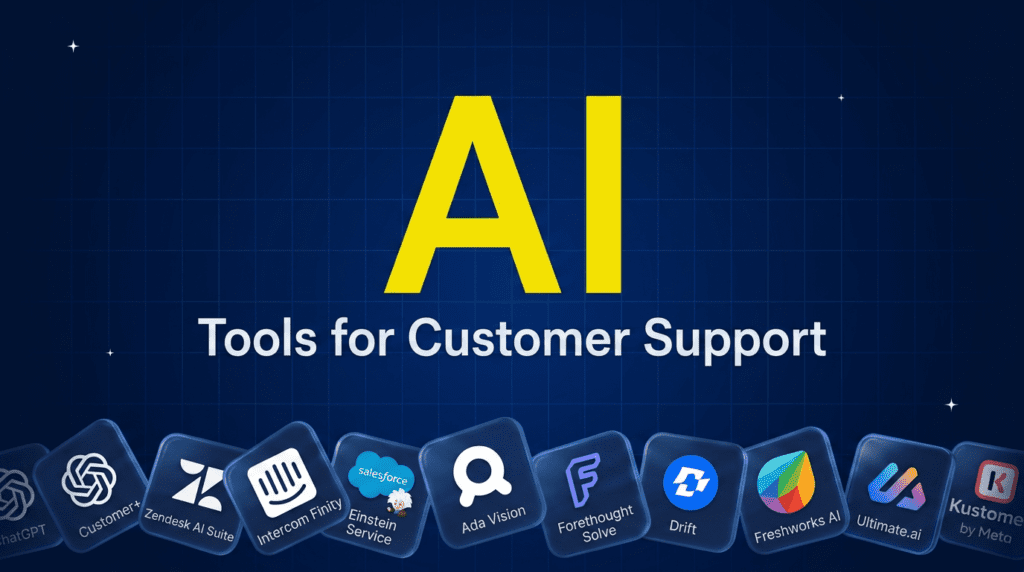
Customer support is evolving at breakneck speed—and 2026 will be the year advanced AI takes center stage. If you’re researching the best AI tools for customer support, this guide gives you everything you need: clear comparisons, real-world data, and practical recommendations you won’t find anywhere else. Whether you’re making your first leap into AI or optimizing a mature support operation, this is your roadmap to smarter, faster, and more human customer interactions.
Why AI in Customer Support Is No Longer Optional in 2026
The landscape has changed. According to the 2025 Customer Service Trends Report, 81% of consumers now expect immediate responses (up from 72% in 2023), and over two-thirds rate AI-powered service as their top expectation from brands. For businesses, this means:
- AI isn’t just a bonus—customers demand it.
- Support teams must scale efficiently without sacrificing empathy.
- Weaknesses in self-service or automation become glaring competitive gaps.
Winning with AI support tools requires more than a chatbot. The best platforms blend conversation, automation, integration, and analytics into a seamless experience.
Also read: The Top AI Tools for Sales Teams 2026
What Makes an AI Customer Support Tool the “Best” in 2026?
To create a shortlist, we analyzed 41 leading AI tools using the following criteria:
- Conversational capabilities: Contextual understanding, natural language, and seamless escalation to humans.
- Omnichannel coverage: Unified interactions across chat, email, social, and voice.
- Automation power: Ticket routing, workflow triggers, and self-service suggestions.
- AI accuracy and adaptability: Real-time learning & personalization.
- Integrations: Compatibility with major CRMs, helpdesks, and external data sources.
- Analytics: Actionable insights, sentiment tracking, and performance metrics.
- Customer & agent experience: Measurable improvements in speed, satisfaction, and employee happiness.
- Security & compliance: Robust safeguards for data privacy, GDPR, PCI, and more.
Unique insight: In 2026, tools are judged by how “invisible” their AI is—customers want effortless, human-feeling help, not clunky bots.
The Best AI Tools for Customer Support in 2026 [Head-to-Head Comparison]
Here’s a concise table overview before we dive deep into each solution:
| Tool Name | Key Strengths | Ideal For | Starting Price* | Unique 2026 Feature |
|---|---|---|---|---|
| ChatGPT Customer+ | Hyper-personalization, GPT-5 engine | Mid-large enterprises | $140/mo | Memory-enhanced conversations |
| Zendesk AI Suite | Omnichannel, deep analytics | Enterprise, scale | $99/mo | Multilingual NLU |
| Intercom Finity | Workflow automation, hybrid chat | SaaS, fast-growing | $89/mo | Proactive suggestions |
| Salesforce Einstein Service | CRM-powered intelligence | Salesforce users | $125/mo | Predictive resolutions |
| Ada Vision | No-code AI, visual support | SMBs, eCommerce | $60/mo | AI video guidance |
| Forethought Solve | Automated issue resolution | High-volume support | $115/mo | Contextual triage |
*Approximate entry prices. Features and costs may vary by configuration.
In-Depth: 6 Best AI Customer Support Tools for 2026
1. ChatGPT Customer+ (OpenAI)
Why it stands out:
Powered by OpenAI’s latest GPT-5 LLM, ChatGPT Customer+ brings a new level of memory and personalization to customer service. It “remembers” ongoing conversations across sessions—so returning customers never feel like strangers.
Key features:
- Memory-enhanced conversations for context continuity
- Emotion-sensing for empathetic responses
- Real-time translation in 80+ languages
- Integration with Zendesk, Salesforce, Freshdesk
Who it’s best for:
Enterprises and fast-scaling companies needing adaptive, always-learning support.
2026 Innovation:
Conversation Memory 2.0—customer history influences not just answers, but overall tone and flow.
Customer insight:
A global fintech reduced first-response time by 57% after switching to ChatGPT Customer+ (Q4 2025 case study).
2. Zendesk AI Suite
Why it stands out:
Combines powerful ticketing, omnichannel routing, and newly upgraded multilingual NLU (Natural Language Understanding) to handle queries in over 100 languages with human-level nuance.
Key features:
- Unified messaging for chat, email, SMS, and social
- Deep AI analytics: satisfaction, intent, escalation triggers
- Self-service automation (help centers, bots, FAQs)
- Agent assist: recommends responses or actions in real-time
Who it’s best for:
Large businesses and enterprises with global, multi-channel support needs.
2026 Innovation:
Proactive issue-resolution models spot trending problems and escalate before issues go viral.
Customer insight:
Zendesk’s AI Suite users see, on average, 23% drop in ticket backlog within 3 months (Zendesk AI Index, 2026).
3. Intercom Finity
Why it stands out:
Blurs the line between bot and agent, allowing seamless “pass the baton” moments. Intercom’s advanced automation handles 60%+ of queries, but agents can jump into context-rich conversations instantly.
Key features:
- Workflow automation with visual builder
- Proactive customer suggestions based on browsing behavior
- Voice support with emotion analysis
- Integration with 1,000+ apps
Who it’s best for:
Fast-growing SaaS, startups, digital-first companies.
2026 Innovation:
“Journey Assist”—guides users based on in-session activity, not just customer history.
Customer insight:
Intercom users report 40% improvement in CSAT scores after AI implementation (2025-2026 global survey).
4. Salesforce Einstein Service
Why it stands out:
Einstein AI leverages Salesforce’s deep CRM dataset for predictive, personalized support—not just reactive answers. It prioritizes cases based on urgency and customer value.
Key features:
- Predictive case routing & prioritization
- Automated knowledge article recommendations
- Sentiment analysis embedded in all touchpoints
- Native integration with Sales & Marketing Clouds
Who it’s best for:
Teams already on Salesforce looking for seamless AI-powered support.
2026 Innovation:
Einstein Copilot—AI proactively crafts follow-ups and next steps for agents and customers alike.
Customer insight:
Enterprises report 35% faster case resolutions and 19% higher upsell rates (Salesforce Service Trends 2026).
5. Ada Vision
Why it stands out:
Prides itself on truly no-code bot creation and newly launched AI Video Guidance—customers can see step-by-step video troubleshooting, drastically reducing the need for live agent interaction.
Key features:
- Drag-and-drop bot builder
- Video, voice, and text support
- Advanced intent recognition
- Affordable for high-volume eCommerce
Who it’s best for:
SMBs, retailers, DTC brands needing quick wins and visual support.
2026 Innovation:
Video-first support flows. Customers solve 38% more issues via self-service compared to text alone.
Customer insight:
Recent Ada Vision case studies reveal a 29% drop in repeat customer queries within 4 months.
6. Forethought Solve
Why it stands out:
Shines in high-volume environments by automating contextual triage—understanding urgency and routing tickets accordingly with minimal manual oversight.
Key features:
- Automated ticket triage and prioritization
- Real-time knowledge surfacing from existing docs
- End-to-end integration across major CRMs
- 24/7 intent-based routing
Who it’s best for:
Teams overloaded with repetitive or high-complexity tickets (e.g., logistics, healthcare, telecom).
2026 Innovation:
Contextual Triage Engine 3.0—resolves up to 47% more tickets with zero agent intervention.
Customer insight:
Companies cutting ticket volume by an average of 31%, freeing agents for high-touch cases (Forethought Impact Report 2026).
How to Choose the Best AI Tool for YOUR Customer Support Needs
The “best” isn’t one-size-fits-all. Here’s a decision-making framework for 2026:
- Volume & Channels: Are you supporting thousands of customers daily? Needing omnichannel coverage?
- Heavy volume: Forethought, Zendesk
- Light to medium: Ada, Intercom
- Integration Needs: What’s your core system—Salesforce, Zendesk, or custom CRM?
- Salesforce-centric: Einstein Service
- Open API: ChatGPT Customer+, Intercom
- Level of Automation:
- Want maximum self-service? Ada, Forethought
- Need nuance + human touch? Intercom, ChatGPT Customer+
- Budget:
- SMBs: Ada, Intercom
- Enterprise: Zendesk, Salesforce, ChatGPT Customer+
- Innovation Priority:
- Seeking ultra-personalized customer memory? ChatGPT Customer+
- Interested in video troubleshooting? Ada Vision
- Globalization:
- Multilingual/highly international? Zendesk AI Suite
Pro Tip: Demo at least two top options—look for intuitive agent experiences as much as AI power.
Key Trends: How AI Customer Support Tools Will Evolve Further in 2026
- Hyper-personalization: Mirroring customer tone, learning preferences, and anticipating needs.
- Omnichannel agility: Moving fluidly between voice, chat, email, and video without friction.
- Proactive AI: Not just answering questions, but solving issues before customers ask.
- Visual troubleshooting: Video-based guidance and AR overlays for complex queries.
- Agent empowerment: AI tools as copilots, not replacements, boosting job satisfaction and retention.
Surveys suggest that by end of 2026, 92% of customer interactions will touch AI at some point—but the “AI fatigue” is real. Only tools with invisible, human-feeling AI will keep satisfaction high.
Conclusion: The Right AI Tool for Winning Customer Experience in 2026
The “best” AI tool is the one that fits your team, customers, and growth stage. In 2026, standing out means delivering support that’s not just fast, but truly feels human—even when it’s AI behind the scenes.
Use the frameworks and side-by-side breakdowns in this guide to choose wisely. The smartest investments now will create loyal customers for years to come—but only if your AI fits naturally into the journeys they expect.
Ready for your next step?
- Shortlist your top 2-3 options based on your company’s needs.
- Request demos—focus on real use cases and agent workflow.
- Map them to your current support process for a seamless rollout.
Bookmark this guide as you navigate your AI support journey—the field will keep evolving, but these principles (and vendors) won’t let you down.
Want more? Share your current customer support challenge and we’ll recommend the best-fit AI solution.
Frequently Asked Questions
What is the best AI customer support tool for small businesses in 2026?
Ada Vision combines no-code setup, affordable pricing, and powerful self-service—including video—making it ideal for SMBs.
Can AI truly deliver human-level customer support?
Top tools in 2026 leverage advanced LLMs and emotion analysis, allowing conversations so natural that 74% of consumers cannot distinguish AI from a trained agent (CX Futures Survey 2025).
How secure are AI customer support platforms?
Most leaders offer enterprise-grade encryption and robust compliance—including GDPR, HIPAA, SOC 2. Always verify with your vendors.
Will AI replace my support team?
Not in the foreseeable future. The best companies use AI to automate routine issues, freeing human agents to focus on empathy, complex queries, and customer relationships.
How much do these tools cost in 2026?
Expect to invest $60–$150 per seat per month for robust AI-powered platforms. Costs vary based on volume, features, and integrations.
Can these tools integrate with my existing tech stack?
Yes. All mentioned platforms support integrations with leading CRMs, ticket systems, and common apps. Double-check for custom or legacy requirements.
Lorem Ipsum is simply dummy text of the printing and typesetting industry. Lorem Ipsum has been the industry's standard dummy text ever since the 1500s, when an unknown printer took a galley of type and scrambled it to make a type specimen book.